


Bitcoin hovers at $68,000 as whales flood exchanges with largest deposits since 2024—but stablecoin supply growth signals capital hasn’t left crypto
The crypto market sits at a critical inflection point. Bitcoin trades around $68,000 after bouncing from yesterday’s $66,900 low, while onchain data reveals a striking divergence: whales are depositing massive amounts to exchanges (typically bearish), yet stablecoin supply continues growing (typically bullish). With the Fear & Greed Index at 13/100—extreme fear territory—the market is sending mixed signals about what comes next.
The Whale Deposit Surge: Distribution or Capitulation?
The most alarming onchain signal this week comes from CryptoQuant data showing the Bitcoin Exchange Whale Ratio hitting 0.64—the highest level since 2015. This metric measures the proportion of top-ten inflows relative to total exchange deposits. When whales dominate exchange inflows, it historically suggests preparation for selling.
The numbers tell the story:
- 6,318 BTC ($425 million) deposited to Binance in a single transaction reported by Crypto Briefing
- 10,900+ BTC moved to exchanges over three days in mid-February
- 30-day whale inflows to Binance: $8.3 billion—the strongest reading since 2024, per CryptoQuant
- Whale ratio jumped from 0.40 to 0.62 in early February, meaning large transactions now account for far more exchange inflows than two weeks ago
Historically, spikes in the Exchange Whale Ratio have preceded heightened volatility and sometimes local tops. However, context matters: these deposits are happening at $68,000, not at all-time highs. Whales moving coins onto exchanges after a 46% drawdown from October’s $126,000 peak could signal either distribution or preparation for capitulation selling.
The Institutional Retreat Continues
U.S. spot Bitcoin ETFs extended their outflow streak, shedding $133.3 million on February 18, led by BlackRock’s IBIT ($84.2 million) and Fidelity’s FBTC ($49 million). This marks the third consecutive day of redemptions, bringing the five-week total to nearly $4 billion in net outflows—a significant reversal from the euphoria that drove inflows earlier this year.
Bitcoin ETF assets now represent roughly 6.3% of BTC’s market cap, meaning these flows directly impact price action. The sustained exodus suggests institutions are trimming exposure rather than buying the dip, a stark contrast to the “buy every pullback” mentality that characterized 2025’s rally.
Ethereum ETFs followed suit, recording $41.8 million in net outflows on February 18, with BlackRock’s ETHA losing $30 million. ETH ETF assets now sit at $11.1 billion (about 4.8% of ETH’s market cap), and the persistent selling has kept Ethereum pinned below the psychologically important $2,000 level.
The only bright spot? Solana ETFs bucked the trend with $2.4 million in inflows, marking their sixth consecutive day of gains. This suggests capital is rotating within crypto rather than exiting entirely—a critical distinction.
The Hidden Bullish Signal: Stablecoin Supply Growth
Here’s where the narrative shifts. Despite Bitcoin’s 23% year-to-date decline—the worst start to a year on record—the total stablecoin market actually grew to $304.6 billion in February, up from $302.9 billion at the end of January, according to Artemis Analytics data.
This is a major contradiction to the bearish price action. Stablecoins represent dry powder—capital sitting on the sidelines ready to deploy. When stablecoin supply grows during a downturn, it means investors are de-risking into dollars without leaving the crypto ecosystem. They’re waiting, not exiting.
The composition of that growth reveals an important rotation:
- USDT supply fell 1.7% to $183.7 billion—the largest monthly drop since the FTX collapse in December 2022
- USDC supply rose nearly 5% to $75.7 billion, driven by regulatory preferences in the EU as MiCA compliance pushes platforms toward Circle’s products
This isn’t capital leaving—it’s capital repositioning. Tether has retired over $4 billion in USDT since the start of 2026, but Circle has captured that flow. The total pie is still growing, which historically precedes renewed buying pressure when risk appetite returns.
Selective Accumulation Amid the Fear
While some whales deposit to exchanges, others are quietly accumulating. Wallets holding between 10,000 and 100,000 BTC added more than 70,000 BTC during February, demonstrating that whale behavior remains divided.
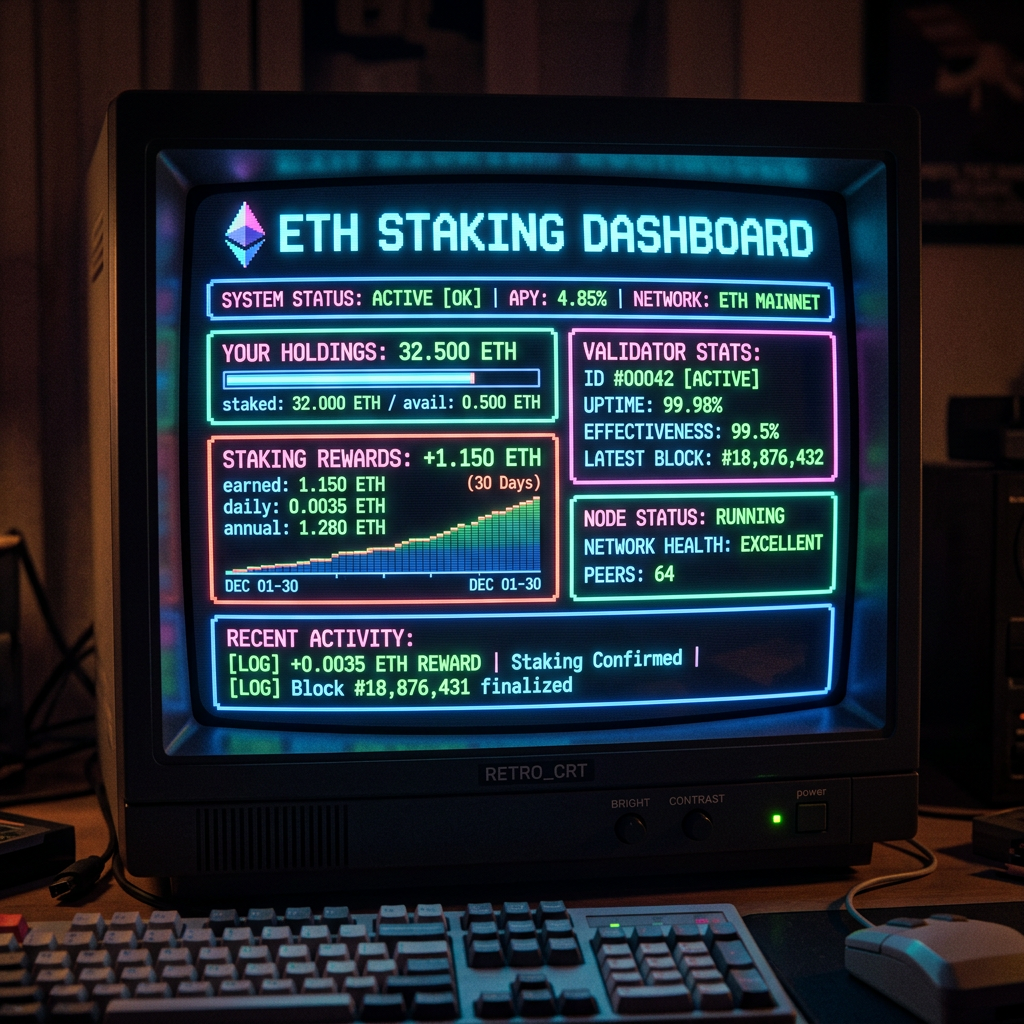
On the Ethereum side, approximately 2.5 million ETH migrated into long-term holding wallets in February, according to Spoted Crypto analysis. Meanwhile, ETH’s staking rate reached 30.1% with 36 million ETH locked (worth roughly $120 billion), the highest on record. This shows deep conviction among long-term holders even as ETF investors exit.
One notable whale with $11 billion in assets opened $748 million in leveraged long positions across BTC, ETH, and SOL, accepting temporary unrealized losses while positioning for a rebound. Another experienced holder made $50 million in profit during recent strength and now holds $845 million in exposure as prices recovered.
Market Structure: Extreme Fear Meets Technical Resistance
Bitcoin currently trades around $68,000, holding above the critical $67,000-$66,500 support zone but struggling to break through $68,500 resistance. Technical analysts note that BTC must hold above $67,000 to maintain bullish structure, with a break below $66,500 potentially triggering a retest of $65,000.
The Fear & Greed Index sitting at 13 out of 100 represents extreme fear—a level that historically appears near market bottoms rather than during ongoing crashes. For context, the index measures sentiment based on volatility, market momentum, social media activity, and surveys.
Ethereum faces similar dynamics, consolidating between $1,930 and $2,050 with key resistance at $2,120-$2,180. A sustained move above $2,180 would confirm bullish momentum, while a breakdown below $1,900 could trigger further declines toward $1,760.
What the Data Is Telling Us
The market is presenting a classic divergence setup:
- Whales depositing to exchanges (bearish)
- ETF outflows accelerating (bearish)
- Extreme fear levels (contrarian bullish)
- Stablecoin supply growing (bullish dry powder)
- Selective whale accumulation (bullish)
- Capital rotating within crypto, not exiting (bullish)
This isn’t a one-directional signal. The data suggests we’re at an inflection point where whales are positioning for the next major move, but the direction remains uncertain. The key will be watching whether:
- Exchange whale deposits translate to actual selling or were repositioning for OTC deals/derivatives
- ETF outflows stabilize or accelerate further
- Stablecoin dry powder gets deployed if BTC breaks above resistance
- The February 20 Supreme Court tariff ruling provided any macro clarity
The Bottom Line
Bitcoin and Ethereum are navigating the most challenging start to a year on record, down 23% and testing critical support levels. The onchain data reveals massive whale repositioning, persistent institutional selling, and record stablecoin reserves building.
But here’s what matters: markets don’t bottom on good news. They bottom when fear peaks, weak hands capitulate, and smart money quietly accumulates while everyone else sells. The divergence between growing stablecoin reserves (dry powder) and shrinking ETF holdings (institutional trimming) suggests capital is repositioning, not fleeing.
Whether this consolidation phase resolves higher or lower likely depends on macro catalysts—Fed policy signals, tariff clarity, or regulatory developments. But the onchain foundation is being laid for the next significant move.
The whales are positioning. The question is: are you ready when they deploy that $304 billion in stablecoin dry powder?
Data sources: CryptoQuant, Whale Alert, CoinDesk, Artemis Analytics, SoSoValue, AInvest, Bittime, Coinbase, Spoted Crypto
Follow @OnchainDecoded for daily onchain metrics decoded for retail investors
Let’s Connect:
Follow us on X: https://x.com/OnchainDecoded
Join our Telegram channel: https://t.me/onchainnewsblog
Subscribe to our newsletter: https://onchainnews.blog/newsletter-alpha/
Disclaimer
The information provided in this article is for informational and educational purposes only and should not be construed as financial, investment, or trading advice. Onchain News does not provide recommendations to buy, sell, or hold any asset, and nothing here should be taken as a guarantee of future performance. Always conduct your own research and consult a qualified financial professional before making any investment decisions. Cryptocurrency markets are volatile and you are responsible for your own risk.


Leave a Reply