
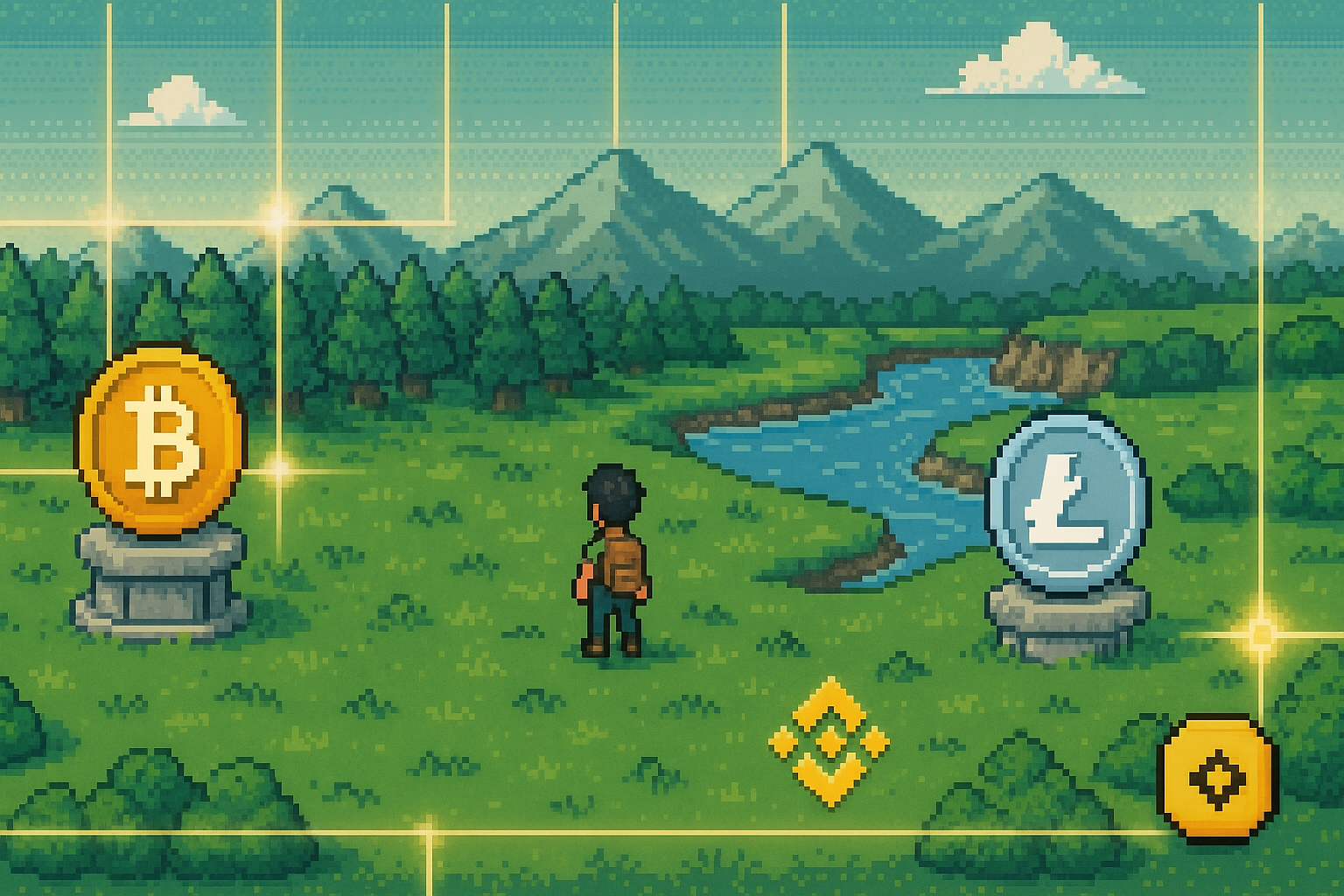

Halvings are some of the most anticipated events in crypto, often surrounded by hype, price predictions, and misconceptions. But halvings are not magic events. They are predictable, scheduled supply adjustments baked directly into a blockchain’s monetary policy.
This evergreen guide breaks down what halvings are, why they exist, their historical impact, and how Bitcoin, Litecoin, and BNB each implement them.
What Is a Halving?
A halving is a programmed event that reduces a blockchain’s block reward, the amount of new coins issued to miners or validators, by 50%.
In Bitcoin and Litecoin (Proof-of-Work chains), this means miners earn half the BTC or LTC for adding a block.
In BNB (which uses a burn-based model), halvings influence the rate of supply reduction.
Halvings create predictable scarcity, which is central to many crypto economic models.
Why Halvings Exist
Halvings ensure:
- Controlled, predictable monetary supply
- Gradual issuance decline over decades
- Reduced inflation over time
- Eventual transition toward fee-based security
This stands in contrast to fiat currencies, where supply is adjusted by discretionary policy.
Bitcoin Halvings: The Blueprint
Bitcoin halves its block reward every 210,000 blocks (roughly every four years).
Bitcoin Halving Timeline
- 2009: Block reward: 50 BTC
- 2012: First halving → 25 BTC
- 2016: Second halving → 12.5 BTC
- 2020: Third halving → 6.25 BTC
- 2024: Fourth halving → 3.125 BTC
- 2028 (projected): Fifth halving → 1.5625 BTC
Key Impacts
Past halvings have historically been followed by multi-month bull cycles, not because of the halving alone, but due to supply-demand shifts and broader market conditions.
Litecoin Halvings
Litecoin mirrors Bitcoin’s halving logic, occurring every 840,000 blocks.
Litecoin Halving Timeline
- 2015: 50 → 25 LTC
- 2019: 25 → 12.5 LTC
- 2023: 12.5 → 6.25 LTC
- 2027 (projected): 6.25 → 3.125 LTC
Litecoin’s halvings tend to have smaller market reactions but still affect mining economics.
BNB Halvings: A Different Model
BNB does not use Proof-of-Work and does not have traditional halvings.
Instead, BNB implements burn-based halvings via two mechanisms:
- Auto-Burn: Quarterly supply reduction
- Real-Time Burn: Based on gas consumption on BNB Chain
The result is a decreasing supply over time, functionally similar to a halving-style inflation curve.
Do Halvings Affect Price?
Halvings influence supply, but price impacts depend on:
- Market demand
- Liquidity conditions
- Macro cycles
- Miner/validator economics
- Exchange flows
Halvings do not guarantee bull markets: they simply adjust issuance.
Miner Economics and Security
As block rewards fall, miners rely more on:
- Transaction fees
- Improved hardware efficiency
- Energy cost optimization
Long-term, networks must balance security and fee incentives to remain sustainable.
What Happens After All Coins Are Minted?
Bitcoin
All 21 million BTC will be mined around the year 2140, after which miners will earn only transaction fees.
Litecoin
LTC will complete issuance around 2142.
BNB
Supply decreases asymptotically through burns until the 100 million BNB target is reached.
Myths vs Reality
Myth: Halvings instantly pump the market.
Reality: Price reactions tend to lag 6–18 months and depend on macro conditions.
Myth: Halvings make mining unprofitable.
Reality: Inefficient miners exit, but the network rebalances difficulty.
Myth: Halvings guarantee long-term returns.
Reality: They reduce inflation: demand still matters.
Final Thoughts
Halvings are critical to the monetary design of many major cryptocurrencies. They provide predictability, scarcity, and a long-term issuance roadmap. But halvings alone don’t determine price, they simply shape the supply side of the equation.
Let’s Connect:
Follow us on X: https://x.com/OnchainNewsBlog
Join our Telegram channel: https://t.me/onchainnewsblog
Subscribe to our newsletter: https://onchainnews.blog/newsletter-alpha/
Disclaimer
The information provided in this article is for informational and educational purposes only and should not be construed as financial, investment, or trading advice. Onchain News does not provide recommendations to buy, sell, or hold any asset, and nothing here should be taken as a guarantee of future performance. Always conduct your own research and consult a qualified financial professional before making any investment decisions. Cryptocurrency markets are volatile and you are responsible for your own risk.

Leave a Reply