

Introduction
Layer 2 networks, often called L2s, have become one of the most important parts of the crypto ecosystem. They are essential for scaling blockchains like Ethereum, reducing fees, and enabling applications to handle millions of users. Without L2s, blockchains would remain slow and expensive because every transaction would need to be processed directly on the main chain.
Ethereum adopted a long-term scaling roadmap based on rollups, which shifts transaction execution off-chain and keeps security anchored to Ethereum’s base layer (Ethereum scaling docs). This design has allowed developers to build faster and cheaper applications without sacrificing the decentralization and security that make blockchains valuable.
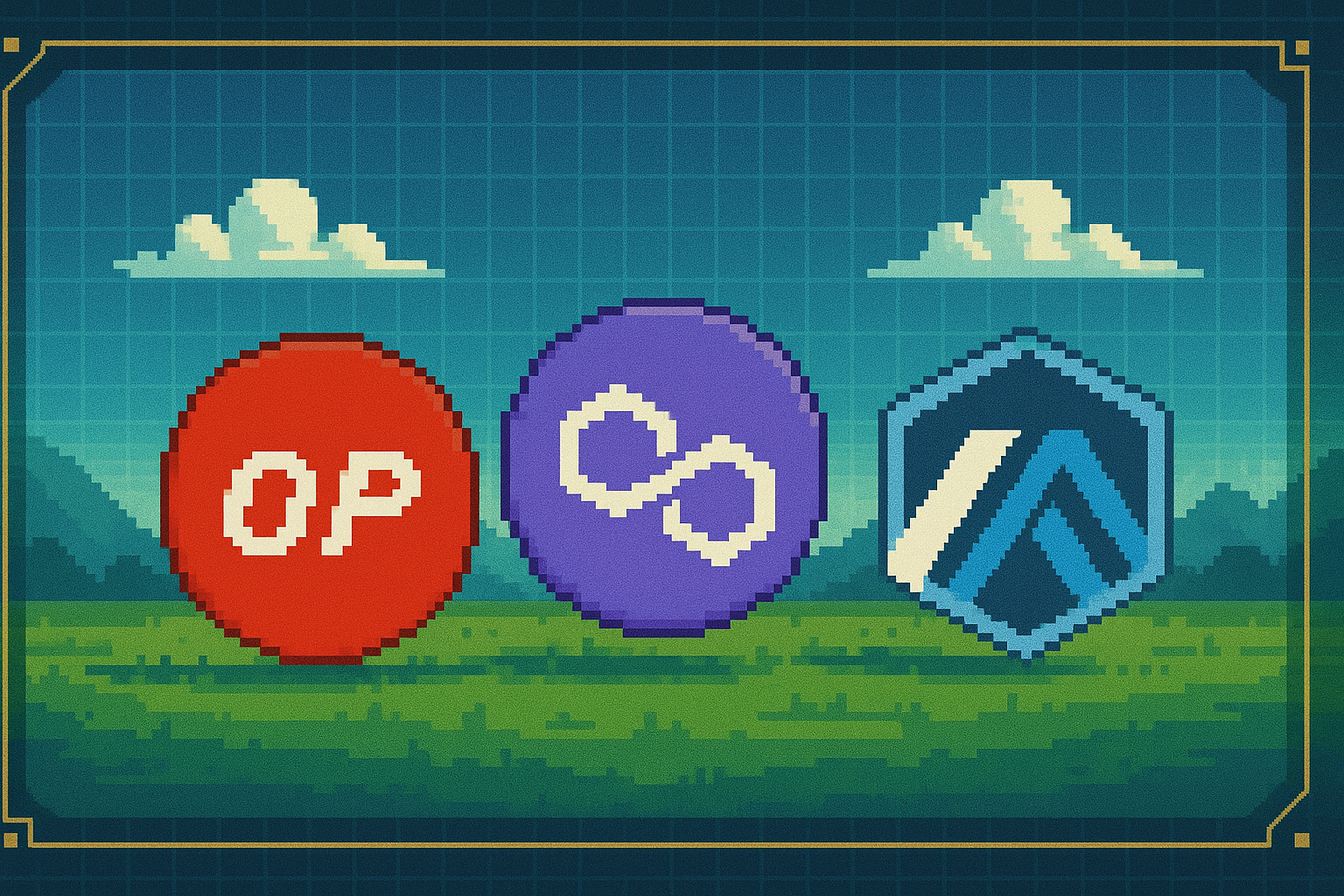
By 2026, L2s have grown into their own vibrant ecosystems, with networks such as Arbitrum, Optimism, Base, zkSync, and StarkNet holding billions of dollars in value and onboarding millions of users.
What Is a Layer 2
A layer 2 network is a blockchain or execution environment built on top of a base chain, such as Ethereum. The L2 handles most of the computation and then posts proofs or transaction data back to the base chain. This enables faster throughput while inheriting the base chain’s security.
A simple way to think about it is:
The L1 provides security.
The L2 provides speed and cost efficiency.
Ethereum developers describe this model as modular architecture, where tasks are separated across layers to maximize performance and safety.
Why Layer 2s Matter
Layer 2s solve several key limitations of base-layer blockchains.
Lower Fees
Processing transactions off-chain dramatically reduces gas costs. L2 users often see fees that are a fraction of the L1 price. Fee charts from L2Beat show significant reductions compared to Ethereum mainnet (L2Beat).
Higher Throughput
L2s batch transactions and submit them in large groups, allowing for far higher transaction capacity than the base chain alone could handle.
Improved User Experience
Low fees and fast confirmations make L2s suitable for gaming, payments, social apps, and other consumer-facing use cases.
Security Anchored to Ethereum
Unlike sidechains, L2s inherit Ethereum’s settlement security. This gives developers and users confidence in the underlying trust model.
Types of Layer 2s
Optimistic Rollups
Optimistic rollups assume transactions are valid unless proven otherwise. Fraud proofs can be submitted to Ethereum if someone believes an invalid transaction was included. Arbitrum and Optimism are the leading optimistic rollups. Their architecture is documented in their respective technical specifications (Arbitrum docs, Optimism docs).
Optimistic rollups offer high compatibility with existing Ethereum tools and languages such as Solidity.
Zero-Knowledge (ZK) Rollups
ZK rollups use cryptographic proofs to verify batches of transactions. These proofs are posted to Ethereum, allowing instant verification. zkSync, StarkNet, and Polygon zkEVM all use zero-knowledge technology (zkSync docs, StarkNet docs).
ZK rollups provide strong security guarantees and faster finality, though they are more complex to build.
Validiums and Hybrid Approaches
Some systems store data off-chain but still rely on Ethereum for proofs. This offers high throughput but trades off some data availability guarantees. Networks such as StarkWare pioneered hybrid data models.
Why Ethereum Chose the L2 Approach
Ethereum cannot scale everything on the base chain without sacrificing decentralization. The Ethereum Foundation’s research describes decentralization, security, and scalability as a tradeoff that must be balanced carefully.
L2s allow Ethereum to keep its base layer simple and secure while letting the ecosystem innovate at higher layers. This modular strategy mirrors the evolution of the internet, where lower layers provide reliability and higher layers enable speed and flexibility.
Real-World Use Cases Growing on Layer 2s
Decentralized Finance
L2s host lending markets, DEXs, derivatives, and yield protocols with much lower fees, making DeFi accessible to smaller users.
Gaming
On-chain games and virtual economies require thousands of transactions per second, which is only feasible on L2s.
Social Apps
Social networks like Farcaster use L2s to store user identities and messages in a cost-efficient way.
Payments
Stablecoins have become significantly cheaper to use on L2s, making them competitive with traditional payment systems.
Enterprise and Tokenization
Institutions exploring tokenization often prefer L2s because they offer lower fees while preserving Ethereum-level security.
Challenges Layer 2s Still Face
Fragmented Liquidity
Value is spread across many networks, and bridging assets introduces complexity.
User Experience
Moving assets between layers, managing different gas tokens, and handling wallets can confuse beginners.
Security Considerations
L2s inherit L1 security, but bridges, sequencers, and infrastructure rely on additional trust assumptions. Projects such as Chainlink CCIP aim to improve cross-chain safety.
Data Availability Costs
Even with compression, posting enough transaction data to the L1 can be expensive. New techniques, such as EIP-4844, aim to lower data costs for rollups.
The Long-Term Vision
Ethereum’s roadmap envisions a world where most activity happens on L2s and the base chain becomes a global settlement network. This model enables scalability without compromising decentralization. Researchers expect L2 ecosystems to eventually handle thousands of applications and millions of daily users, supported by efficient rollup technologies and shared liquidity frameworks.
For beginners, the key idea is that L2s are not competitors to Ethereum. They are extensions that make Ethereum faster, cheaper, and more useful.
Summary
Layer 2 networks are critical to blockchain scaling. They enable Ethereum to support high-throughput applications without losing its security and decentralization. L2s reduce fees, increase speed, and open the door to real-world use cases across DeFi, gaming, social apps, and enterprise finance. As the ecosystem grows, L2s are becoming the primary place where users and applications interact with Web3.
Let’s Connect:
Follow us on X: https://x.com/OnchainNewsBlog
Join our Telegram channel: https://t.me/onchainnewsblog
Subscribe to our newsletter: https://onchainnews.blog/newsletter-alpha/
Disclaimer
The information provided in this article is for informational and educational purposes only and should not be construed as financial, investment, or trading advice. Onchain News does not provide recommendations to buy, sell, or hold any asset, and nothing here should be taken as a guarantee of future performance. Always conduct your own research and consult a qualified financial professional before making any investment decisions. Cryptocurrency markets are volatile and you are responsible for your own risk.


Leave a Reply