
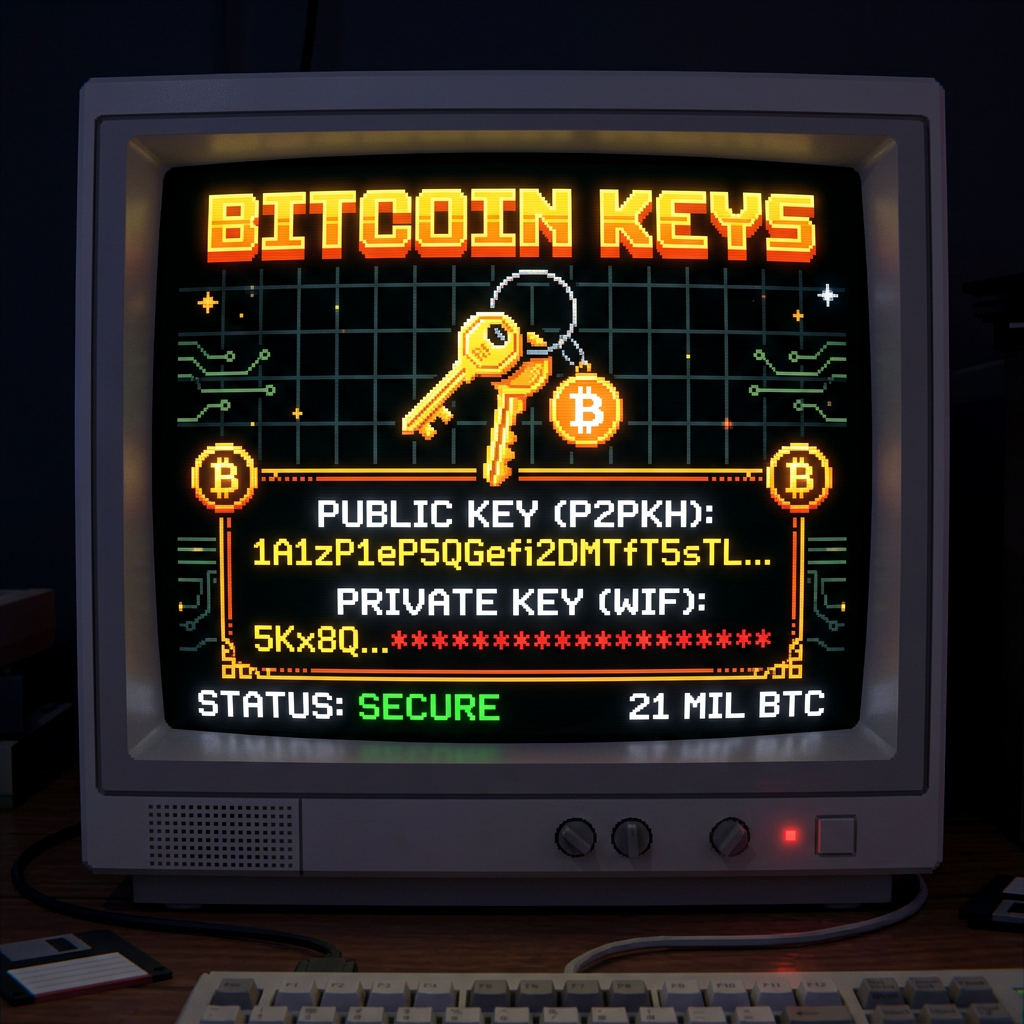

Private key management separates crypto ownership from custody. Understanding how keys work, how to back them up securely, and how to ensure heirs can access funds is essential for anyone holding significant cryptocurrency.
What is a Private Key?
A private key is a 256-bit number (77 digits) that proves ownership of cryptocurrency. It’s functionally impossible to guess: there are more possible private keys than atoms in observable universe. Anyone with your private key controls your crypto. No private key = no access, regardless of how much you “own.”
Technical but Accessible Explanation: Private keys use elliptic curve cryptography to generate corresponding public keys and wallet addresses. The math ensures private keys can generate public addresses, but public addresses can’t reverse-engineer private keys. One-way functions enable trustless verification without revealing sensitive data.
BIP39 Standard: How 12/24 Word Phrases Work
Remembering 77-digit numbers is impossible. BIP39 (Bitcoin Improvement Proposal 39) standard converts private keys into memorable word sequences called seed phrases or recovery phrases.
How It Works:
- Wallet generates random 128-bit (12 words) or 256-bit (24 words) number
- Number converts to words using standardized 2,048-word dictionary
- Checksum adds final word to detect errors
- Words in specific order uniquely encode private key
“abandon ability able about above absent absorb abstract absurd abuse access accident” represents specific private key. Change one word or order, you get completely different key.
Why It Matters: Seed phrases are human-readable backups. Lose your hardware wallet? Buy new one, enter seed phrase, restore complete access. Seed phrase = master key generating all your wallet’s private keys using deterministic derivation.
Derivation Paths and Hierarchical Deterministic Wallets
Modern wallets generate multiple addresses from single seed phrase using derivation paths (BIP32/BIP44 standards). This enables organizing funds without managing separate backups.
Derivation Path Example: m/44’/60’/0’/0/0
- 44′: BIP44 standard
- 60′: Ethereum (Bitcoin is 0′)
- 0′: Account index
- 0: External chain (receiving addresses)
- 0: Address index
One seed phrase → unlimited addresses across multiple cryptocurrencies. This explains why hardware wallets support thousands of coins without storing thousands of keys: they derive everything from master seed.
Steel Backup Plates vs Paper: Durability Comparison
Paper degrades, burns, water-damages. Steel backups withstand fire, corrosion, crushing. Multiple products exist:
Billfodl/Cryptosteel: Tiles slot into steel case, creating tamper-evident physical backup. Survives house fires (1400°F+), flooding, corrosion.
Cryptotag: Laser-engraved titanium plates. Maximum durability, discrete appearance.
Coldbit Steel: Affordable punched steel plates. Less elegant but functional.
DIY Option: Steel washers + stamps. Cheap but labor-intensive.
Cost-Benefit: Steel backups cost $50-150 but protect life-changing amounts. Paper costs pennies but fails catastrophically. For holdings worth protecting, steel isn’t optional: it’s insurance.
Best Practice: Create multiple steel backups, store in separate physical locations (home safe, bank deposit box, trusted family member). Redundancy prevents single points of failure.
Shamir’s Secret Sharing: Splitting Seed Phrases Securely
Shamir’s Secret Sharing mathematically splits seed phrases into multiple shares requiring threshold to recover. Example: 3-of-5 scheme creates 5 shares, any 3 can restore seed phrase, but 2 or fewer reveal nothing.
Advantages:
- No single point of failure
- Distribute shares to family members, lawyers, safe deposit boxes
- Resistant to theft (attacker needs multiple shares)
- Customizable thresholds (2-of-3, 3-of-5, etc.)
Disadvantages:
- More complex setup and recovery process
- Requires hardware wallet supporting Shamir (Trezor Model T, Passport)
- If you lose too many shares, funds are permanently inaccessible
- Beneficiaries need technical knowledge to recover
When to Use: High-value holdings where single seed phrase creates unacceptable risk. Business treasuries. Inheritance planning requiring multiple parties.
Social Recovery Wallets
Social recovery wallets (Argent, Loopring) enable trusted contacts to help recover access if you lose seed phrase. Designate 3-5 “guardians”: friends, family, hardware wallets. If locked out, guardians approve recovery collectively.
Advantages:
- No seed phrase to lose or secure
- User-friendly for non-technical users
- Can revoke/change guardians over time
- Works through smartphone interface
Disadvantages:
- Requires trusting guardians (they could collude)
- Still experimental technology
- Limited to specific chains (mainly Ethereum L2s)
- Guardian coordination can be difficult
Who Should Use: Crypto beginners afraid of seed phrases. People without secure storage options. Those preferring convenience over maximum security.
Estate Planning: Ensuring Heirs Can Access Crypto
Unlike banks with estate procedures, crypto dies with you unless heirs have access. Estate planning is essential for significant holdings.
Option 1: Direct Disclosure Leave seed phrase with estate documents in bank safe deposit box or with attorney. Risk: Executor could steal funds before distribution.
Option 2: Shamir Shares for Heirs Create 3-of-5 Shamir backup. Give one share to each heir, keep one yourself, give one to attorney. Your death enables combination of shares for recovery. Protects against single person theft.
Option 3: Time-Locked Inheritance Services like Casa enable creating inheritance protocols with time-locked recovery. After specified inactivity period (1 year), beneficiaries can access funds.
Option 4: Trusted Custodian Use institutional custody service (Coinbase Custody, BitGo) with clear succession plan. Sacrifice self-custody for easier inheritance mechanics.
Legal Considerations:
- Include crypto holdings in will with instructions
- Make executors aware of cryptocurrency existence
- Consider tax implications for heirs
- Update estate plan as holdings change
- Ensure beneficiaries can technically access funds
The Tragic Reality: Billions in Bitcoin are permanently lost because holders died without passing seed phrases to heirs. Don’t let your wealth disappear.
Recovery Procedures: Step-by-Step
If Hardware Wallet Lost/Damaged:
- Purchase replacement device (same manufacturer recommended)
- Select “Restore Wallet” option
- Enter seed phrase exactly as backed up
- Set new PIN/passphrase
- Verify addresses match originals
- Transfer funds to new addresses for extra security
If Seed Phrase Compromised:
- Immediately transfer all funds to new wallet with fresh seed
- Never reuse compromised wallet
- Investigate how compromise occurred
- Improve security practices going forward
If Forgetting PIN (Hardware Wallet):
- PINs protect device access, not seed phrase access
- Wipe device after maximum attempts
- Restore from seed phrase on wiped device
- Set new PIN
Common Mistakes That Cause Permanent Loss
- Storing seed phrase digitally: Cloud storage, photos, password managers get hacked
- Emailing seed phrase: Email isn’t encrypted; providers can read it
- Not testing recovery: Many discover backups don’t work only during emergencies
- Storing all backups in one location: House fire/flood destroys everything
- Overthinking security: Ultra-complex schemes you’ll forget beat schemes you won’t follow
- Underestimating security: “I’ll remember it” never works; write it down
- Sharing with too many people: More people = more risk
- Not updating estate plans: Beneficiaries should know crypto exists and how to access it
The Bottom Line
Private key security is non-negotiable. Unlike banks where you can reset passwords, crypto provides no safety net. One mistake: lost seed phrase, compromised security, forgotten passwords: means permanent, irrecoverable loss.
Recommended Setup for Most Users:
- Hardware wallet (Ledger/Trezor) for majority of holdings
- Steel backup plates in 2-3 physical locations
- Periodic testing of recovery procedures
- Clear estate planning documentation
- Separate hot wallet for small amounts and frequent transactions
Extreme Security Setup:
- Hardware wallet with passphrase (25th word)
- Shamir’s Secret Sharing for seed phrase
- Multisig wallet requiring multiple signatures
- Geographically distributed backups
- Professional custody for portion of holdings
- Legal documentation for inheritance
The effort seems excessive until you consider the stakes. Would you store $100,000 in cash under your mattress with no backup plan? Crypto requires the same seriousness. Your future self will thank you for thoroughness.
Let’s Connect:
Follow us on X: https://x.com/OnchainNewsBlog
Join our Telegram channel: https://t.me/onchainnewsblog
Subscribe to our newsletter: https://onchainnews.blog/newsletter-alpha/
Disclaimer
The information provided in this article is for informational and educational purposes only and should not be construed as financial, investment, or trading advice. Onchain News does not provide recommendations to buy, sell, or hold any asset, and nothing here should be taken as a guarantee of future performance. Always conduct your own research and consult a qualified financial professional before making any investment decisions. Cryptocurrency markets are volatile and you are responsible for your own risk.
Common questions
What is the difference between a private key and a seed phrase? The seed phrase is a human-readable representation from which all the wallet’s private keys are derived. Back up the phrase and you have everything; back up one key and you have one address.
Is a photo of the phrase acceptable? No. Photos sync to cloud services by default, which puts the phrase on someone else’s infrastructure. Physical, offline, and ideally in more than one location is the standard.
What happens if part of the phrase is lost? A small number of missing words can sometimes be brute-forced given the checksum, but this gets impractical fast and depends on knowing the word positions. Assume a partial backup is no backup.



Leave a Reply