
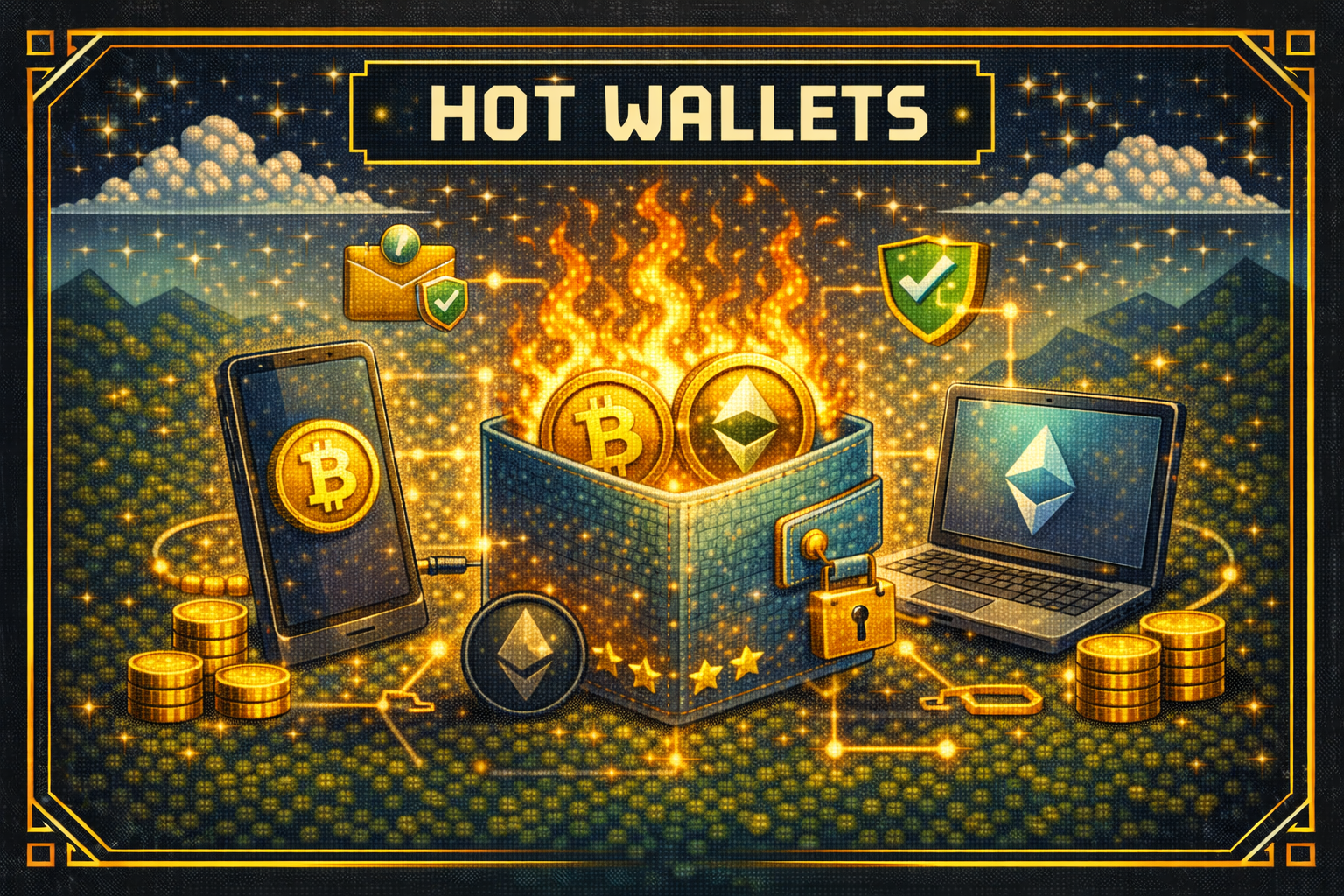

Introduction: Your Crypto Bank Account Strategy
You wouldn’t carry your entire life savings in your physical wallet when going shopping. You’d keep most money in a bank account and carry just enough cash for immediate needs. The same principle applies to cryptocurrency, but the consequences of getting it wrong are more severe.
Hot wallets (internet-connected software wallets) offer convenience for daily transactions, DeFi interactions, and quick trades. Hardware wallets provide maximum security but slow down frequent use. The solution isn’t choosing one over the other: it’s strategic allocation across both, separating spending money from long-term holdings.
This guide teaches you to architect a practical, secure crypto wallet system that balances accessibility with protection, using multiple wallets for different purposes and risk profiles.
Understanding the Wallet Hierarchy
Modern crypto security isn’t about finding one perfect wallet: it’s about creating a multi-layer system matching different use cases to appropriate security levels.
The Three-Tier Model
Tier 1 – Cold Storage (Savings Account):
- 70-90% of total holdings
- Hardware wallets (Ledger, Trezor)
- Long-term holds, large amounts
- Accessed infrequently (monthly or less)
Tier 2 – Warm Wallet (Checking Account):
- 10-25% of holdings
- Software wallet on secure device (MetaMask on dedicated computer)
- Medium-term holds, moderate DeFi use
- Accessed weekly
Tier 3 – Hot Wallet (Pocket Money):
- 1-10% of holdings
- Mobile wallet or browser extension
- Daily transactions, experimental DeFi, NFT minting
- Accessed daily
The Principle: Never risk more than you’re willing to lose in each tier.
Why Separation Matters: Real-World Consequences
The All-In-One Wallet Disaster
Scenario: Developer keeps entire portfolio ($250,000) in MetaMask for convenience. One day:
- Visits new NFT minting site
- Approves malicious contract
- Contract drains entire wallet
- $250,000 gone in seconds
What Should Have Happened:
- $200,000 in hardware wallet (untouched)
- $40,000 in clean interaction wallet
- $10,000 in burner wallet for new sites
- Maximum loss: $10,000
The Smart Contract Approval Nightmare
Every time you interact with DeFi protocols, you grant token approvals: permissions for contracts to spend your tokens. These approvals persist until revoked.
Problem: One compromised approval = entire token balance at risk.
Solution: Approval wallet holds only what’s needed for current transaction. Compromised approval can’t drain funds that aren’t there.
Setting Up Your Wallet Architecture
Tier 1: Cold Storage Setup
Hardware Wallet Selection:
- Ledger Nano S Plus ($79): Budget option, excellent security
- Ledger Nano X ($149): Bluetooth, mobile support
- Trezor Model T ($219): Touchscreen, open-source firmware
Setup Procedure:
- Purchase Direct: Only buy from manufacturer or authorized retailers. Never buy used.
- Secure Setup Environment:
- Private location
- No cameras/recording devices
- Disconnect internet during seed phrase backup
- Generate Seed Phrase:
- Let device generate random seed (24 words recommended)
- Write on paper immediately
- NEVER photograph or type into computer
- Verify each word carefully
- Create Multiple Backups:
- Primary backup: Secure home location
- Secondary backup: Different physical location (bank safe deposit box, trusted family member)
- Consider metal backups (Cryptosteel) for fire/water protection
- Set Strong PIN:
- 8 digits minimum
- Not birthday, common patterns, or easily guessed
- Device wipes after 3 failed attempts (feature, not bug)
- Test Recovery:
- Before depositing funds, reset device and restore from seed
- Confirms backup works correctly
- Most important step many skip
Cold Storage Usage:
- Check balance rarely (reduces device exposure)
- Only connect for withdrawals or large deposits
- Never connect to untrusted computers
- Update firmware regularly but cautiously (read release notes)
Tier 2: Warm Wallet Setup
Dedicated Computer Approach (Most Secure):
- Obtain Clean Device:
- Old laptop/desktop wiped clean
- Fresh OS installation
- Dedicated exclusively to crypto (no other software)
- Harden System:
- Install antivirus (Malwarebytes, Bitdefender)
- Enable firewall
- Keep OS updated
- Disable unnecessary services
- Install Wallet Software:
- Security Configuration:
- Strong unique password (use password manager)
- Enable auto-lock (5-10 minutes)
- Review and revoke approvals monthly via Revoke.cash
Virtual Machine Alternative:
- Run Linux VM on main computer
- Isolates crypto activity from daily computing
- Tools: VirtualBox, VMware
- Less secure than dedicated device but better than nothing
Usage Guidelines:
- Major DeFi positions (Aave, Compound deposits)
- Liquidity provision
- Governance participation
- Trusted protocol interactions only
Tier 3: Hot Wallet Setup
Mobile Wallet (Convenience Priority):
- Choose Reputable Wallet:
- Trust Wallet
- Coinbase Wallet
- Rainbow
- Phantom (Solana)
- Secure Phone First:
- Strong passcode + biometric
- Auto-lock enabled (30 seconds)
- Find My Phone active
- Keep OS updated
- Wallet Security:
- Separate seed phrase from other wallets
- Store seed securely (not in phone notes)
- Use PIN protection within app
- Enable transaction confirmations
Browser Extension (Desktop Convenience):
- Install Fresh Profile:
- Extension Hardening:
- Review all permissions
- Auto-lock after 1 minute
- Never export private keys
- Regularly clear approvals
Hot Wallet Usage:
- New protocol testing (small amounts)
- NFT minting (FOMO drops)
- Quick swaps (<$1000)
- Tipping/donations
- Anything experimental
Maximum Exposure Rule: Never keep more than 1 week’s salary equivalent in hot wallets.
Fund Flow Management
Depositing to Cold Storage
From Exchange:
- Withdraw small test amount first ($10-20)
- Verify receipt in cold wallet
- Withdraw full amount
- Never reuse deposit address if avoidable (privacy)
From Hot Wallet:
- Batch transfers when possible (save gas)
- Use high gas fees (protecting large amounts worth the cost)
- Verify address carefully (hardware wallet displays for confirmation)
- Keep transaction records
Withdrawing from Cold Storage
Best Practice Flow:
- Connect hardware wallet only when ready to transact
- Send to warm wallet, not hot wallet
- Disconnect hardware wallet immediately
- Move funds from warm → hot if needed
Why Not Direct Cold → Hot?:
- Minimizes hardware wallet exposure
- Creates transaction buffer
- Warm wallet verifies destination before cold wallet confirms
Regular Rebalancing
Monthly Review:
- Check hot wallet balance
- If >10% of total portfolio, move excess to warm/cold
- If <2% of total, refill from warm wallet
- Rebalance warm wallet quarterly
After Large Profits:
- Made $10K profit trading? Move $8K to cold storage
- Keep gambling with original stake + small profit
- Prevents giving back gains to exploits
Advanced Strategies
The Interaction Wallet
Create a wallet specifically for interacting with new or untrusted contracts.
Setup:
- Fresh wallet, separate seed
- Never hold funds longer than single transaction
- Request exact amount needed from warm wallet
- Perform interaction
- Immediately return assets to warm wallet
- Wallet sits empty until next use
When to Use:
- Brand new protocols (<1 month old)
- Unaudited contracts
- Community forks or experimental projects
- Anything you’re uncertain about
Maximum Loss: Only what you sent for that specific transaction.
NFT Wallet Separation
NFTs deserve special treatment due to smart contract risks.
Structure:
- Display Wallet: Holds valuable NFTs, NEVER signs transactions
- Minting Wallet: Used for minting, immediately transfers to display wallet
- Trading Wallet: Holds NFTs actively being traded
Rationale:
- Display wallet stays air-gapped from contract interactions
- Compromised minting wallet can’t steal valuable collection
- Trading wallet exposed only when actively buying/selling
Multi-Signature for Large Holdings
For holdings >$100K, consider multi-sig wallets requiring multiple signatures for transactions.
- 2-of-3 or 3-of-5 configurations common
- Requires multiple devices to approve transactions
- One compromised device can’t drain funds
Setup Examples:
- 2-of-3: Ledger + Trezor + Mobile wallet (need any 2)
- 3-of-5: Multiple hardware wallets across locations
Tradeoff: Complexity and recovery challenges vs. enhanced security.
Security Hygiene
Approval Management
Every DeFi interaction grants token approvals: permissions for contracts to spend your tokens.
Monthly Audit:
- Visit Revoke.cash
- Connect each wallet
- Review all approvals
- Revoke anything:
- You don’t recognize
- From protocols you no longer use
- Unlimited approvals for significant holdings
Preventative Strategy:
- Grant limited approvals when possible (exact amount vs. unlimited)
- Revoke immediately after transaction completes
- Never approve unfamiliar contracts
Address Whitelisting
Some wallets support address whitelisting, only pre-approved addresses can receive funds.
Benefits:
- Prevents clipboard hijacking (malware swapping addresses)
- Protects against typos
- Stops malicious dApps from requesting unauthorized destinations
Implementation (Rabby Wallet):
- Settings → Security → Address Whitelist
- Add trusted addresses (exchanges, your other wallets)
- Enable strict mode (rejects non-whitelisted)
Transaction Simulation
Before confirming transactions, simulate to see actual effects.
Tools:
- Tenderly: Simulate transactions before sending
- Rabby Wallet: Built-in simulation showing token flows
- Pocket Universe: Browser extension warning system
What to Check:
- Token amounts match expectations
- Destination address correct
- No unexpected approvals granted
- Gas fee reasonable
Red Flags:
- Simulation shows more tokens leaving than expected
- Unexpected contract calls
- Approvals you didn’t intend to grant
Common Mistakes to Avoid
Mistake 1: Mixing Wallets
Problem: Using cold storage seed to create hot wallet.
Why It’s Bad: Compromised hot wallet seed = compromised cold storage.
Solution: Every wallet tier uses completely separate seed phrases.
Mistake 2: Over-Centralization
Problem: All wallets on one device or seed phrase backup in one location.
Why It’s Bad: Single point of failure: lose phone, lose everything. House fire destroys only seed phrase backup.
Solution:
- Multiple devices for different tiers
- Geographically distributed seed phrase backups
- Never store seeds digitally
Mistake 3: Approvals on Cold Storage
Problem: Connecting hardware wallet to DeFi protocols and granting token approvals.
Why It’s Bad: Even hardware wallets are vulnerable to malicious approvals. Device can’t prevent you from signing bad transactions.
Solution: NEVER grant approvals from cold storage. Move funds to warm wallet first.
Mistake 4: Ignoring Small Balances
Problem: “It’s only $100, not worth moving to cold storage.”
Why It’s Bad: Small balances add up. Dust accumulates into significant amounts.
Solution: Set threshold ($500-1000) and batch-transfer when reached.
Mistake 5: Browser Extension on Main Profile
Problem: Installing MetaMask in primary browser used for all internet activity.
Why It’s Bad: Phishing sites, malicious downloads, random browsing all risk wallet.
Solution: Dedicated browser profile or separate browser entirely for crypto.
Emergency Procedures
If Hot Wallet Compromised
Immediate Actions:
- STOP using wallet immediately
- If funds remain, transfer to new wallet ASAP
- Check warm and cold storage (likely safe if different seeds)
- Revoke all approvals from compromised wallet
- Report to wallet provider and relevant protocols
Do NOT:
- Try to “rescue” funds if actively draining (you’ll likely lose gas fees too)
- Reuse any part of compromised wallet
- Assume it’s resolved without thorough check
If Warm Wallet Compromised
Immediate Actions:
- Check if cold storage seed is separate (should be)
- Transfer remaining warm wallet funds to new warm wallet
- Create new warm wallet with new seed
- Revoke approvals
- Analyze how compromise occurred
Investigation:
- Review recent dApp interactions
- Check computer for malware
- Examine approval history on blockchain explorer
If Cold Storage Compromised
This Should Be Nearly Impossible if following best practices, but if it happens:
Immediate Actions:
- Move funds to new hardware wallet IMMEDIATELY
- Generate new seed phrase on new device
- Analyze how it possibly occurred:
- Seed phrase photographed/digitized?
- Physical theft of backup?
- Purchased pre-owned device?
Prevention: This is why we practice security theatre for cold storage setup.
Portfolio Allocation Examples
Conservative ($10K Portfolio)
- Cold Storage: $8,000 (80%)
- BTC/ETH long-term holds
- Major altcoins
- Warm Wallet: $1,500 (15%)
- Stablecoin lending positions
- Blue-chip DeFi (Aave, Uniswap)
- Hot Wallet: $500 (5%)
- Trading capital
- Small experimental positions
Moderate ($50K Portfolio)
- Cold Storage: $37,500 (75%)
- Core holdings
- Long-term investments
- Warm Wallet: $10,000 (20%)
- Active DeFi positions
- LP provision
- Governance participation
- Hot Wallet: $2,500 (5%)
- NFT minting
- New protocol testing
- Active trading
Aggressive ($100K Portfolio)
- Cold Storage: $70,000 (70%)
- Core positions
- Retirement holdings
- Warm Wallet: $20,000 (20%)
- DeFi strategies
- Yield farming
- Hot Wallet: $10,000 (10%)
- High-risk experiments
- NFT flipping
- Memecoin gambling
Principle: As portfolio grows, hot wallet percentage should decrease, not increase absolutely.
Conclusion: Security Through Architecture
Hot wallet security isn’t about finding the perfect wallet: it’s about creating a system where no single failure destroys your portfolio.
Core Principles:
- Separation: Different wallets for different purposes
- Proportionality: Risk exposure matches usage frequency
- Isolation: Compromised hot wallet doesn’t threaten cold storage
- Discipline: Regularly rebalance, never let hot wallet grow unchecked
The best security system is one you’ll actually use. Start simple:
- Hardware wallet for savings
- One software wallet for active use
- Separate interaction wallet for risky protocols
As portfolio grows and experience deepens, add complexity: dedicated devices, multi-sig, specialized wallets for NFTs, governance, and trading.
Remember: Convenience killed more crypto portfolios than sophisticated hacks. Structure reduces risk without sacrificing usability.
Your crypto security is only as strong as your worst wallet. Build a tiered system, and no single mistake ruins you.
Key Resources:
- Ledger Hardware Wallets
- Trezor Hardware Wallets
- MetaMask Browser Wallet
- Rabby Wallet
- Revoke.cash – Approval Management
- Gnosis Safe – Multisig
- Trust Wallet – Mobile
- Tenderly – Transaction Simulation
- Cryptosteel – Seed Backup
Let’s Connect:
Follow us on X: https://x.com/OnchainNewsBlog
Join our Telegram channel: https://t.me/onchainnewsblog
Subscribe to our newsletter: https://onchainnews.blog/newsletter-alpha/
Disclaimer
The information provided in this article is for informational and educational purposes only and should not be construed as financial, investment, or trading advice. Onchain News does not provide recommendations to buy, sell, or hold any asset, and nothing here should be taken as a guarantee of future performance. Always conduct your own research and consult a qualified financial professional before making any investment decisions. Cryptocurrency markets are volatile and you are responsible for your own risk.
Leave a Reply