
Introduction
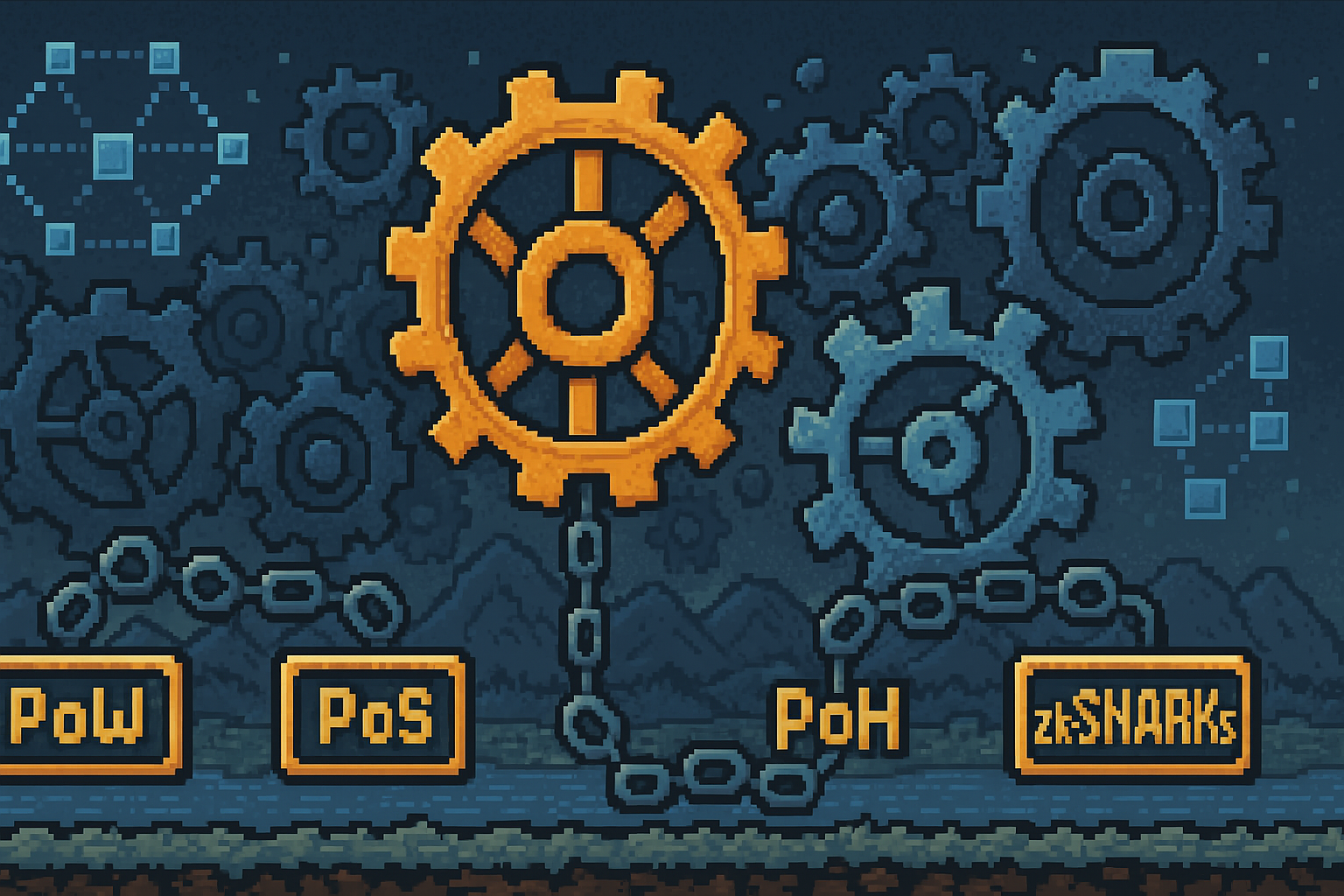
Consensus algorithms determine how participants agree on the state of a blockchain. The four networks under study, Bitcoin, Ethereum, Solana and Zcash illustrate contrasting approaches.
Proof‑of‑Work (PoW)
Bitcoin and Zcash both use PoW, albeit with different algorithms. Bitcoin miners compete to find a SHA‑256 hash below a target; difficulty adjusts every 2016 blocks to maintain ten‑minute block times coinshares.com. Zcash uses the memory‑hard Equihash algorithm to discourage ASIC dominance kriptomat.io. PoW’s security derives from energy expenditure; reversing a transaction history would require redoing the work for all subsequent blocks, making attacks prohibitively expensive. However, PoW is energy‑intensive. The EIA estimates U.S. crypto mining consumes up to 2.3% of national electricity eia.gov, and halving events pressure miners to adopt renewables ey.com.
Proof‑of‑Stake (PoS)
Ethereum switched to PoS during the September 2022 Merge, reducing energy use by roughly 99.95% ethereum.org. Validators lock ETH as stake and are randomly selected to propose and attest to blocks; malicious behavior can result in stake slashing. The Pectra upgrade increases the maximum effective stake per validator from 32 ETH to 2048 ETH quicknode.com and introduces execution‑layer exits, improving flexibility quicknode.com. PoS achieves security through financial penalties rather than physical resource consumption, but critics warn about centralization risks as large holders accumulate influence.
Proof‑of‑History (PoH) and Tower BFT
Solana adds a novel twist by embedding time into consensus. Proof‑of‑History is a verifiable delay function that timestamps transactions, allowing validators to agree on order before executing them investopedia.com. The network uses Tower BFT, a variant of Byzantine fault tolerance optimized for PoH’s timing assumptions. Coupled with Delegated PoS, Solana achieves sub‑second block times and thousands of transactions per second cryptoeq.io. Upcoming asynchronous execution aims to further decouple ordering from execution helius.dev, improving reliability and throughput.
zk‑SNARKs and Optional Privacy
While zk‑SNARKs are not a consensus mechanism, they fundamentally change transaction validation. Zcash uses zk‑SNARKs to prove knowledge of a valid transaction without revealing amounts or addresses galaxy.com. The technology allows optional privacy: users can choose transparent or shielded addresses, and the introduction of Halo 2 eliminates trusted setups while enabling recursive proofs z.cash. zk‑SNARK verification is computationally heavy, contributing to Zcash’s small node count galaxy.com.
Comparative Analysis
PoW offers battle‑tested security at the cost of high energy usage and slower transaction speeds. PoS dramatically reduces energy consumption and supports faster upgrades, but concentrates power among large stakers. PoH provides high throughput and fast finality, though critics question its long‑term decentralization and complexity. zk‑SNARKs deliver strong privacy but increase computational demands and regulatory scrutiny. Understanding these trade‑offs is crucial for developers, investors and policymakers shaping the future of blockchain technology.
Disclaimer
The information provided in this article is for informational and educational purposes only and should not be construed as financial, investment, or trading advice. Onchain News does not provide recommendations to buy, sell, or hold any asset, and nothing here should be taken as a guarantee of future performance. Always conduct your own research and consult a qualified financial professional before making any investment decisions. Cryptocurrency markets are volatile and you are responsible for your own risk.

Leave a Reply