

Some of the best onchain signals do not predict direction. They predict that a big move is coming, without saying which way. The Sell-Side Risk Ratio is one of those. It measures how aggressively holders are realizing profit and loss relative to the size of the asset, and its quietest readings have a habit of appearing right before volatility returns. Here is how it works and why it deserves a place on your dashboard.
The core idea
Every day, some coins move at a profit and some at a loss. The Sell-Side Risk Ratio compares the total realized value, profit plus loss, to the realized cap, the network’s aggregate cost basis. In plain terms, it asks: how much value are holders locking in today compared to the total value stored in the network?
The ratio strips the question down to equilibrium. Are holders transacting at prices far from their cost basis, creating large realized profit or loss? Or are they moving coins close to what they paid, leaving the network in a quiet balance?
High and low readings
- High Sell-Side Risk Ratio: holders are realizing large amounts of profit or loss relative to network size. This means coins are moving at prices far from their acquisition cost, a sign that the current price level has found significant agreement and a lot of repricing is occurring. High values often appear after big moves, as holders react.
- Low Sell-Side Risk Ratio: holders are transacting close to their cost basis, realizing very little net profit or loss. The market has reached equilibrium. Most coins that wanted to move at these prices have already moved.
Why low readings matter most
The counterintuitive insight is that the quietest readings are often the most important. When the Sell-Side Risk Ratio compresses to very low levels, it means the market has fully digested the current price range. Profit-takers have taken profit, loss-sellers have sold, and the remaining holders are content. Equilibrium has been reached.
Equilibrium is not stable for long. Prices in agreement and low realized activity describe a coiled spring. Historically, deep compressions in this ratio have preceded major expansions in volatility, because once the market has exhausted sellers and buyers at a given level, it takes relatively little new pressure to force a breakout. The ratio does not tell you the direction, only that the calm is unlikely to last.
How to use it with other metrics
Because it is directionless, the Sell-Side Risk Ratio is best paired with metrics that do carry directional bias. When the ratio is compressed and signalling that a move is near, you look elsewhere to guess which way:
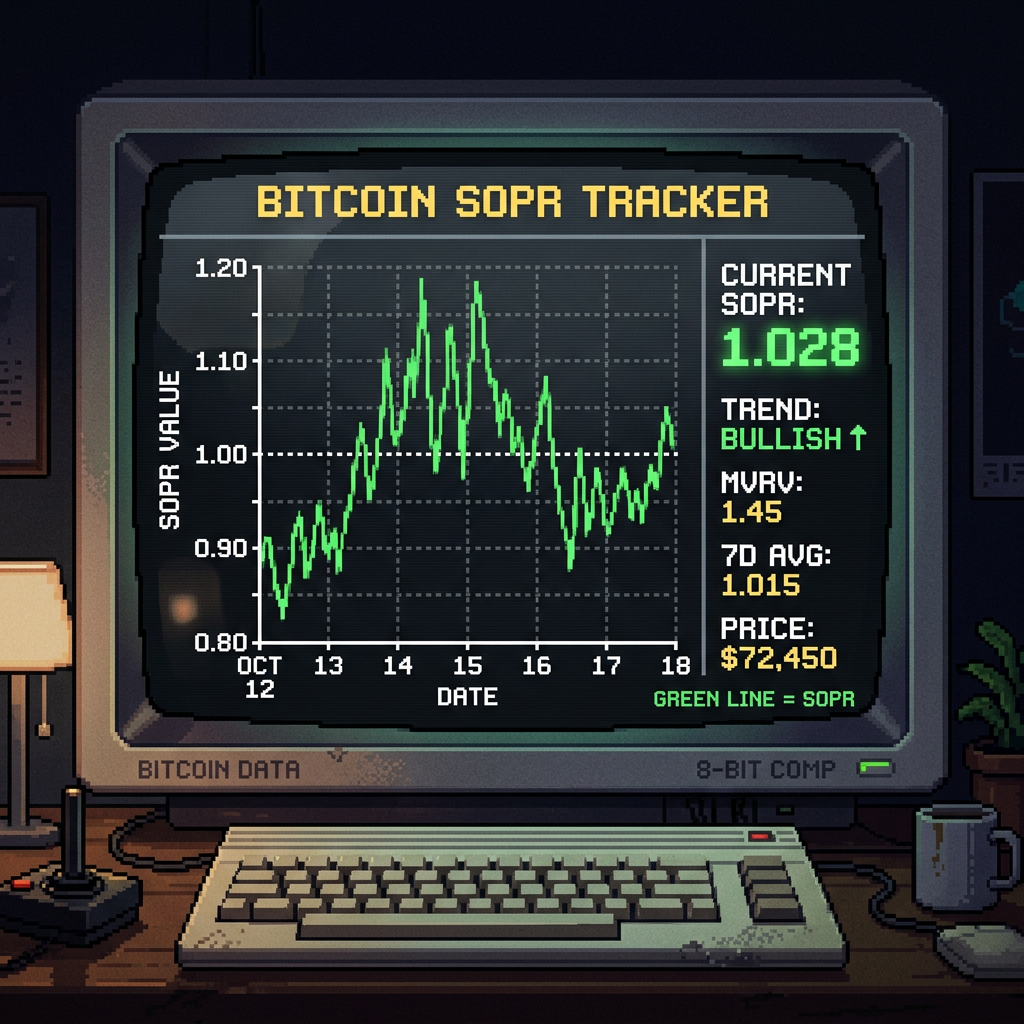
- STH-SOPR and the short-term holder cost basis for whether recent buyers are defending or capitulating. See our SOPR guide.
- Exchange reserves for whether supply is leaving or returning to sell venues. See exchange reserves explained.
- MVRV for whether the broader market is cheap or stretched.
The Sell-Side Risk Ratio tells you when to pay attention. The directional metrics help you guess at what comes next.
A simple mental model
Think of it as a volatility coil gauge. When it is wound tight, energy is building and the market is compressed. When it releases, the move tends to be large. It will not hand you the direction, but it will tell you when complacency is highest and a surprise is most likely. That alone makes it valuable, because the most dangerous time in markets is often when nothing seems to be happening.
The takeaway
The Sell-Side Risk Ratio measures realized profit and loss against the size of the network, turning it into a clean read on market equilibrium. Its low, compressed readings are the ones to respect, because quiet equilibrium rarely lasts. Use it to know when a big move is brewing, then lean on directional metrics to position for it. Not financial advice, always do your own research.


Leave a Reply